Last reviewed: July 2026 · SecondFyre Alkemy Kitchen
Phytoestrogens is a word that sounds more complicated than it is. Phyto means plant. Oestrogens are your steroid hormones. Phytoestrogens are plant compounds that can bind to estrogen receptors in your body and produce estrogen-like effects — typically weaker than actual estrogen, but measurable.
They exist in your food. You are almost certainly already eating them. The question is whether you’re eating enough of the right ones, and understanding what they’re actually doing.
The Three Main Types
Isoflavones are the most studied phytoestrogens. They are found primarily in soy and soy products — tofu, tempeh, edamame, miso, soy milk. Genistein and daidzein are the primary isoflavones in soy, and they have the most robust research behind them for menopausal symptom reduction.
Lignans are found in flaxseed (the richest source), sesame seeds, whole grains, and some fruits and vegetables. Gut bacteria convert lignans into enterolactone and enterodiol — compounds that have estrogenic and anti-estrogenic effects depending on context.
Coumestans are found in sprouted legumes, particularly mung bean and alfalfa sprouts, and red clover. They have stronger estrogenic activity than isoflavones or lignans.
What the Research Actually Says
The evidence for soy isoflavones specifically is the strongest among phytoestrogens. Multiple meta-analyses have found that soy isoflavone supplementation reduces hot flash frequency and severity in perimenopausal women — by roughly 20-25% on average, less than HRT but real and consistent. The effect is more pronounced in women who consume soy regularly than in those using supplements, possibly because the gut bacteria required to metabolise isoflavones (equol-producing bacteria) are better established in regular consumers.
Flaxseed has evidence for reducing hot flash frequency in postmenopausal women, and for mild blood pressure-lowering effects. 2 tablespoons of ground flaxseed daily is the amount used in most positive trials.
The historical concern about phytoestrogens and breast cancer risk has been largely revised. Current evidence, including a large meta-analysis, suggests that dietary soy consumption is not associated with increased breast cancer risk in healthy women — and may actually be protective. For women with hormone receptor-positive breast cancer, the picture is more nuanced and should be discussed with an oncologist.
How to Eat More of Them, Practically
The Japanese diet — the population with the highest traditional soy intake and consistently the lowest rates of severe menopausal symptoms globally — includes soy at most meals. Not in supplement form. As food: miso soup, edamame, tofu, tempeh.
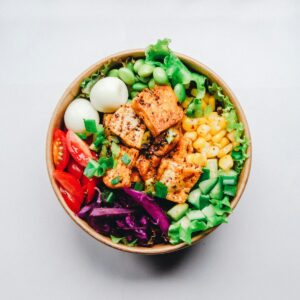
Two tablespoons of ground flaxseed on yoghurt or in a smoothie daily. Edamame as a snack or in grain bowls. Tempeh as a protein source twice a week. Tofu in stir-fries. Miso in soups, dressings, marinades. These are not radical dietary changes. They are straightforward additions to an already-existing diet.
Last reviewed: July 2026 · SecondFyre Editorial
Sources
This is not your slow down. This is your second fyre.